
Rutété Eco Lodge is a place of life, transmission, and hospitality, born from a family story and a deep commitment to the land, local knowledge, and respectful tourism. This document presents the soul of the project—its origins, its values, the women and men who bring it to life, and the sustainable ecosystem that surrounds it.

The Meaning of Rutété
Rutété is a word from the Kinyarwanda language. It refers to a small, light, and modest basket. In Rwandan tradition, this basket is used to carry, share, and pass on. It remains open. It hides nothing. It moves from hand to hand.
In the Akagera region, and more specifically in Rwinkwavu, the basket is closely tied to fertile land, harvests, and a form of simple abundance. It evokes an open territory shaped by agriculture, water, and exchange. Rutété embodies this idea: an open, welcoming, and generous place—one that receives and transmits.
The Story of the Lodge
The story of Rutété begins with Julienne Toch. Born to a Rwandan mother and a Belgian father, Julienne grew up between cultures. Her father settled in Rwanda to harness the richness of the region’s soil, developing a mining activity in Rwinkwavu. Just steps away from the mine, a colonial house was built around 1930, where he lived.
In Rwinkwavu, he met Julienne’s mother, who worked as a midwife at the local hospital. Julienne spent her childhood in this house, surrounded by her parents and siblings. Then came departure—studies in Belgium, followed by a life shared between Europe and the United States.
Over time, a deeper calling emerged: the need to reconnect, to return to her roots, and to honor her father’s story and family legacy. Julienne began the long process of reclaiming the family land. The house was in ruins, abandoned for years, as if asleep. After lengthy administrative procedures, she finally recovered the home of her childhood. One certainty became clear: this place would become the project of her life.

The Birth of the Eco Lodge
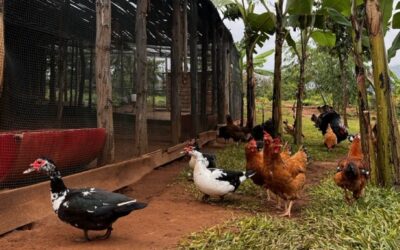
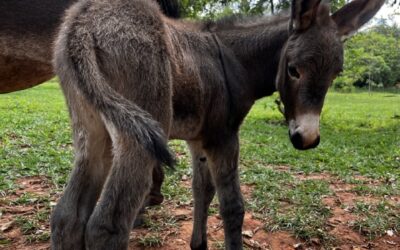
The idea was simple: to make use of the vast land. To cultivate. To plant. To bring the soil back to life—vegetables, fruits, flowers, and native species. A farm gradually took shape: pigs, ponies, ducks, turkeys, chickens, rabbits, a fish pond, two dogs, and a cat. Biodiversity became central. So did open air and space.
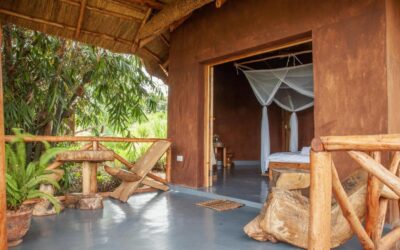
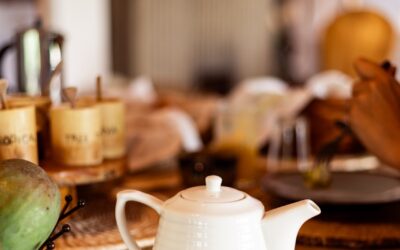
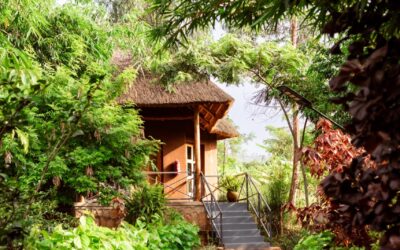
Rutété Eco Lodge was conceived as a living ecosystem. Over the years, the land transformed. Vegetation grew dense and lush. The outdoors became a nourishing jungle. The produce served at the guest table comes from the property itself or from nearby farmers, fishers, and producers. Agricultural surplus is redistributed through local markets or shared with other initiatives in the region.

Craftsmanship at the Heart of the Project
Rutété is built on a fundamental principle: creating with the people of this land. The lodge is deeply engaged with the communities of Rwinkwavu and its surroundings. It employs, trains, and supports local workers, fostering the transmission and recognition of local skills.
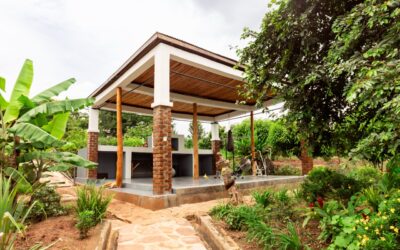
Building restoration, furniture making, decoration, and daily improvements are all carried out on site. The lodge’s workshops are alive: basket weaving, woodworking, metalwork, pottery, gardening, animal care, and laundry. Everything is done by hand, using traditional techniques. Nothing is automated. Nothing is motorized.
Rutété is a place of slowness—of deliberate gestures, respect for materials, and knowledge passed from one generation to the next.
0 Comments